
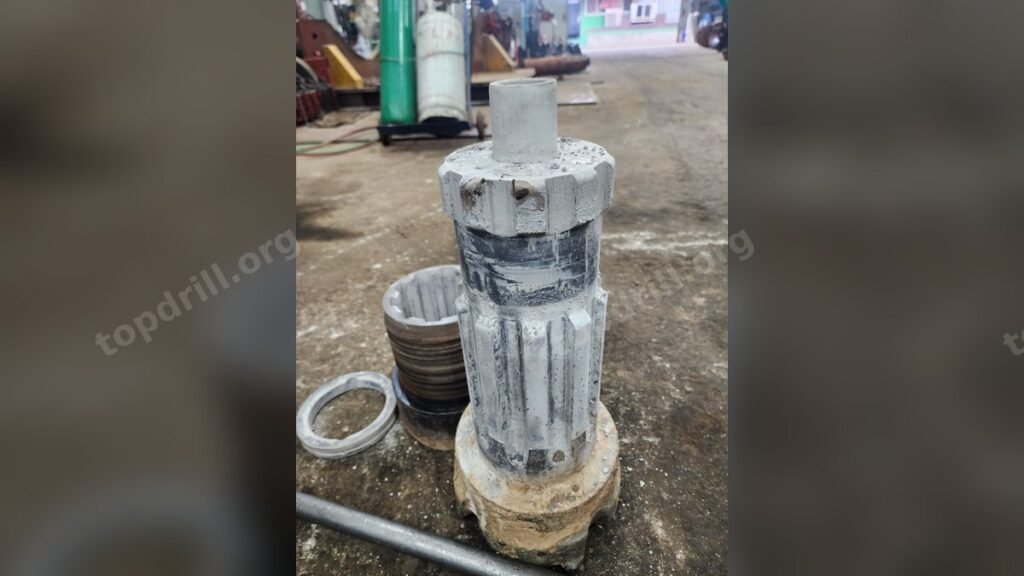
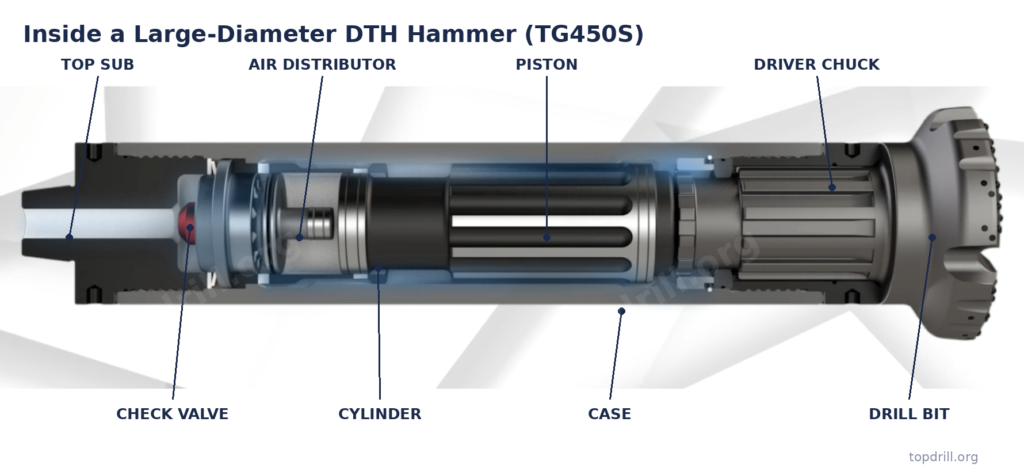
Few things stop a drilling site faster than a DTH hammer that suddenly goes quiet. Air is flowing, the rig is running — but there is no percussion.
A DTH hammer not striking almost always comes down to one of six causes. Before you pull the string and open the hammer, work through them in order. They fall into three groups: air and pressure sealing failures, mechanical lock-up, and foreign matter inside the hammer. We have arranged them in a practical checking order, from the most common cause to the most serious. Four of the six can be addressed in the field without a full teardown.
1. Broken Foot Valve
Symptom: A hammer that was striking normally suddenly weakens or stops entirely — often after striking with the bit off the bottom.
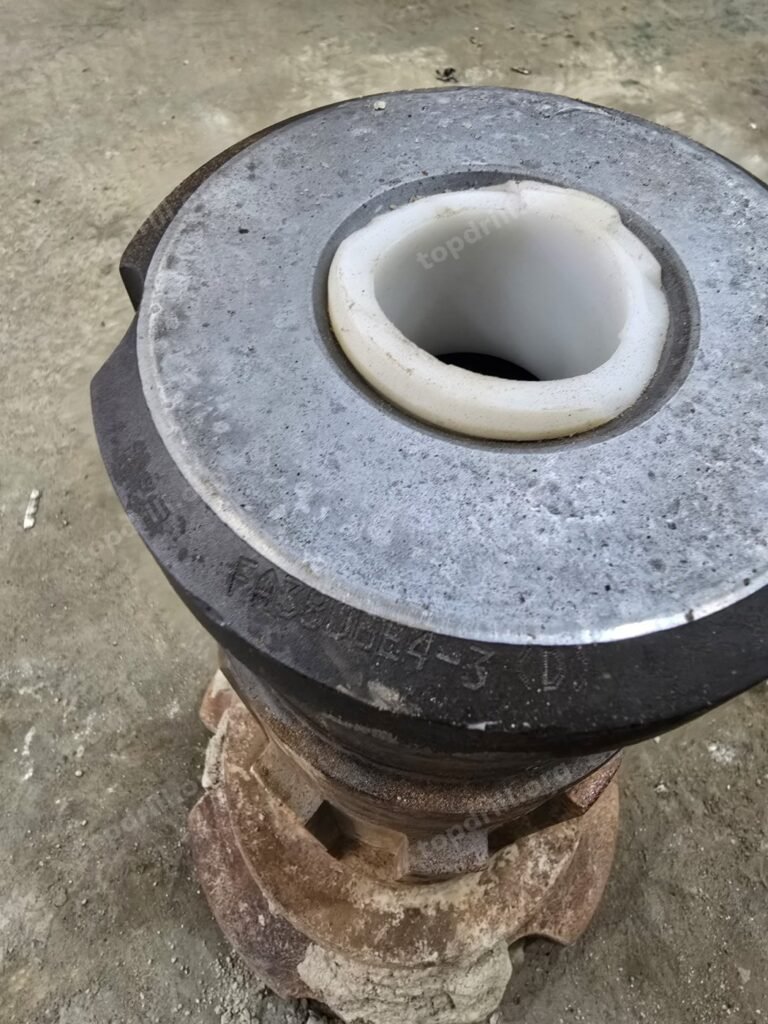
The plastic foot valve (exhaust tube) fitted to the bit shank seals the air path between the hammer’s upper and lower working chambers.
Cause: Several mechanisms wear it out. Bit wobble from driver chuck clearance shakes the valve out of alignment, and the mist carried in the shockwaves between the piston strike face and the bit steadily erodes the valve material. Repeated blank firing — striking with the bit not seated on rock — and constant exposure to high-velocity exhaust air then crack or break it.
What happens inside: Once the foot valve fails, compressed air no longer drives the piston. It bypasses straight down the central flushing hole, and the hammer strikes weakly or stops.
Fix: Pull the bit and inspect the foot valve. Replace it at the first sign of cracking — it is an inexpensive part. Just as important, stop operators from blank firing.
2. Water and Sludge Backflow Into the Hammer
Symptom: After stopping the hammer in a water-bearing formation, it refuses to restart when you resume work some time later.
Leaving the hammer sitting in the hole with the air shut off in groundwater conditions is an invitation for trouble.
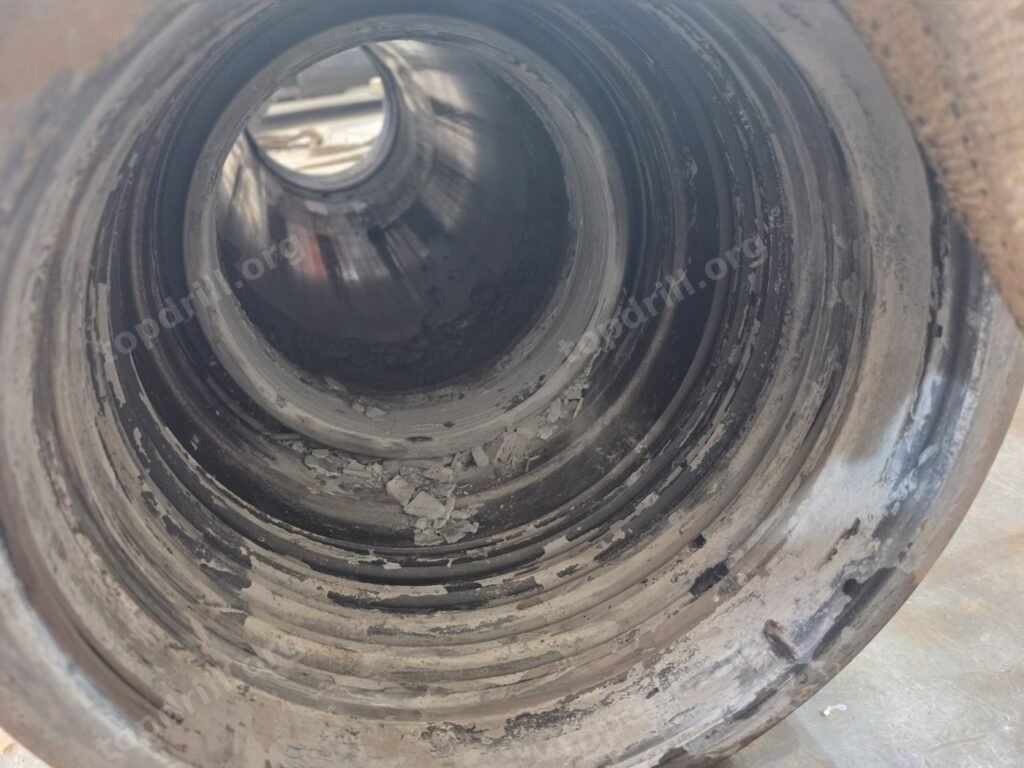
Cause: If the check valve in the backhead seals poorly or has debris caught in it, pressurized groundwater and abrasive silt slurry flow backwards into the working chambers.
What happens inside: Clay and sand particles pack into the piston guide surfaces and block the fine air ports, physically locking the piston.
Fix: Before any shutdown, always blow the hammer through with plenty of air to purge water and debris. Never leave the hammer parked on a wet hole bottom with the air off. If contamination has already occurred, the hammer must be disassembled and cleaned internally.
3. Bit Locked in the Flushing Position (Clay Ground)
Symptom: Air blows continuously through the bit, but striking never begins.
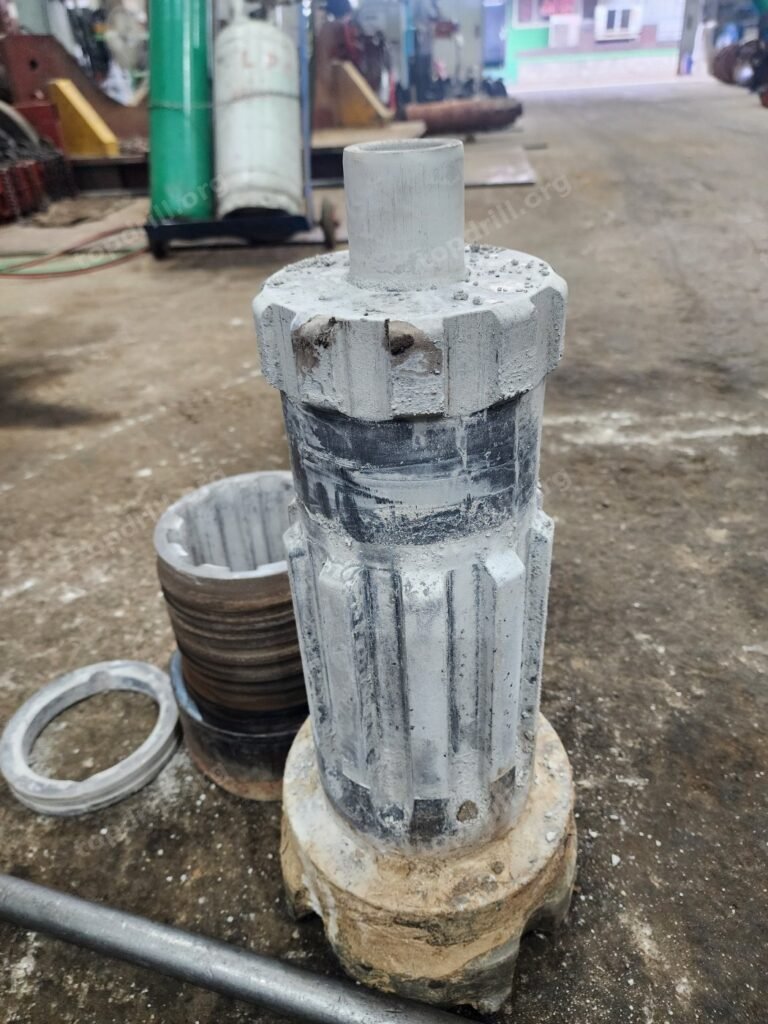
A DTH hammer only starts when ground contact pushes the bit up into the hammer, aligning it with the piston strike face — the drilling position.
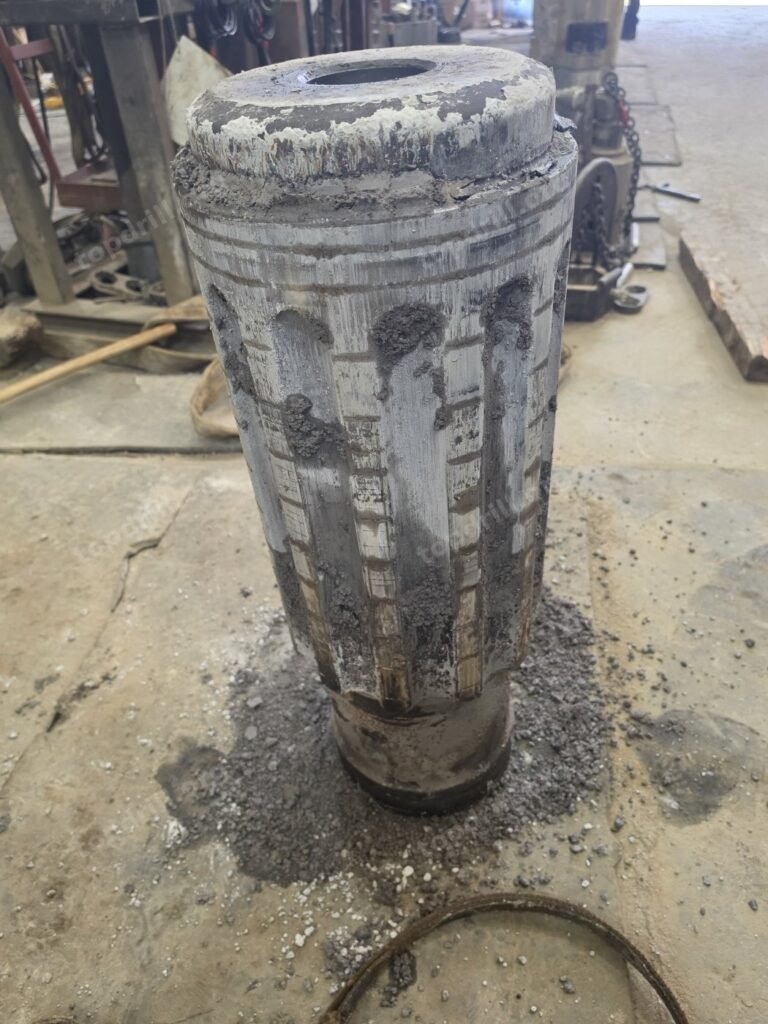
Cause: In sticky clay or weathered ground, mud packs hard into the bit splines and locks the bit in the lower flushing position.
What happens inside: The piston can never reach its strike zone. Compressed air escapes straight downward instead of cycling the piston.
Fix: Raise and lower the hammer repeatedly, and cycle the rotary head between rotation and stop, again and again. Inject a large volume of water around the hammer — the goal is to turn stiff mud into a flowable slurry. Thin mud releases the splines; thick mud grips them. Then flush with plenty of air while rotating to clear the splines. If sticky ground continues, adjust your flushing practice before suspecting a hammer fault.
4. Too Much Oil — or Parts Assembled the Wrong Way
Symptom: The hammer fails to start right after servicing, or right after topping up oil.
Cause: Rock drill oil is essential, but there is such a thing as too much. Pouring well beyond the normal initial charge — roughly 1.5–2.0 L for large hammers — floods the working chambers with high-viscosity oil. Separately, internal parts fitted upside-down during reassembly will stop the hammer from working at all.
What happens inside: Excess oil pooled in the chambers slows the rapid pressure changes the strike cycle depends on, so the hammer struggles to start its cycle.
Fix: Stick to the specified initial oil charge. After any teardown, pay close attention to the orientation of every part — check each one against the service documentation before the hammer goes back down the hole.
5. Internal Freezing in Cold Weather
Symptom: A hammer that worked fine all day is completely dead the next very cold morning.
Cause: Compressed air cycling between high and low pressure inevitably produces condensation, and that moisture can remain inside the hammer. Wet drilling leaves even more residual water behind. In sub-zero storage, that water freezes.
What happens inside: Ice bonds the piston to the cylinder wall. DTH pistons are heavy — roughly 45 kg in an 8-inch hammer and up to about 284 kg in an 18-inch class — and compressed air alone cannot break an ice bond spread over that much contact area.
Fix: Before winter storage, blow the hammer through with air until all moisture is out, then store it with a proper dose of oil inside. If it is already frozen, use the heat you already have on site: compressor discharge air is hot — around 70 °C — so crack the valve slightly and feed air continuously to warm and thaw the piston gradually. Never try to force a frozen hammer into operation.
6. Piston Seizure From Dry Running
Symptom: The hammer stops dead during operation and the piston will not move at all. This is the most serious failure on the list.
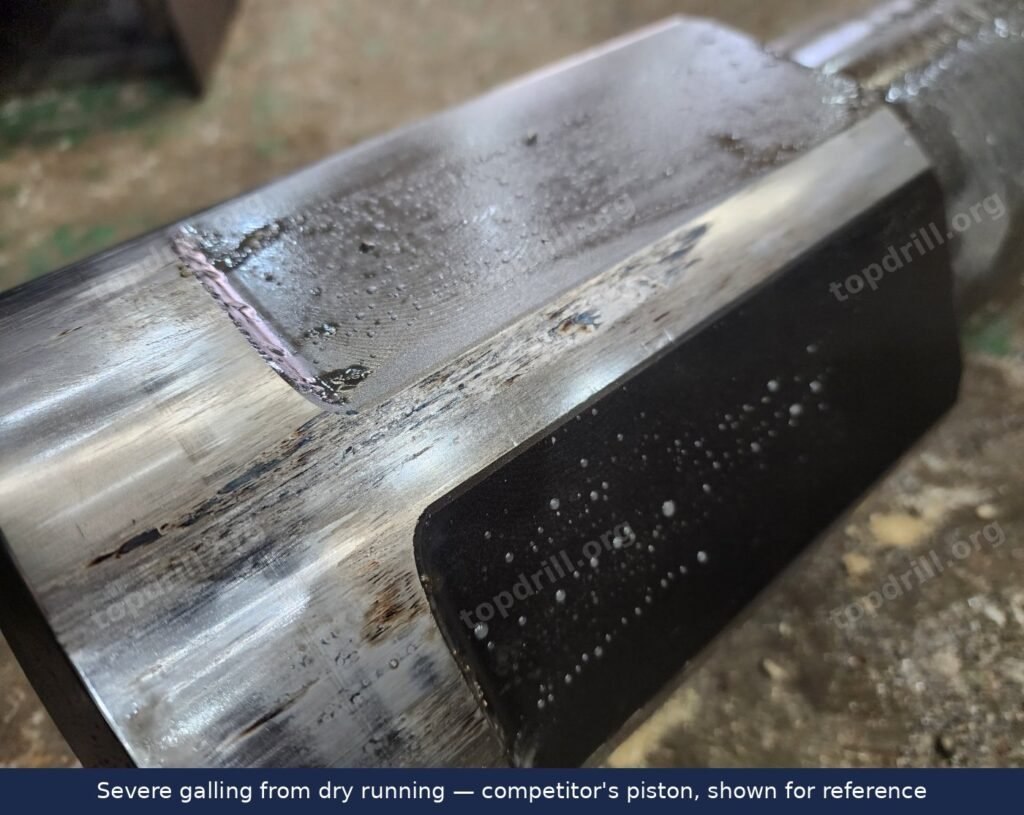
Cause: Running a DTH hammer without proper rock drill oil starts direct metal-on-metal friction between the piston and the cylinder.
What happens inside: In under a minute of dry running, piston surface temperature can climb past 750 °C (1,400 °F). The running clearance between piston and cylinder is only a few hundredths of a millimeter — thermal expansion consumes it completely. The softened metal surfaces weld together (galling), and the piston seizes solid.
Fix: This one is about prevention, not repair. Confirm the lubricator is actually feeding oil before every shift. A seized piston usually means a factory-level rebuild, and in some cases both the piston and cylinder must be scrapped.
When the Checklist Isn’t Enough
Most no-strike situations on site trace back to one of these six causes, and four of them can be addressed in the field without a full teardown. If you have worked through the list and your hammer still refuses to strike — or if the same failure keeps recurring on large-diameter hammers — our engineering team is happy to help diagnose it.
Topdrill has manufactured DTH hammers and bits up to 40 inches since 1999, supplying contractors in over 100 countries.
Explore our full product range: www.topdrill.kr
Technical questions: Contact us or chat with us on WhatsApp.